
English 
Address:
No, 309 Guandoumen Road, Wuhu Distict, China (Anhui) pilot Free Trade Zone


Views: 0 Author: Site Editor Publish Time: 2026-03-19 Origin: Site


Investing in a new CNC turning center is a high-stakes decision where a "near-miss" in precision can cost you dearly. Relying on spec sheets alone without understanding their real-world implications often leads to scrapped parts, missed deadlines, and a machine that fails to deliver its promised return on investment. The industry has moved far beyond simple two-axis lathes; today's multi-axis turning centers are complex systems where every component contributes to the final quality of the part. This guide provides a practical framework for evaluating CNC turning center technical specifications. We will move beyond marketing claims to help you match machine capabilities to your production tolerances, ensuring you get the precision you pay for and a positive impact on your bottom line.
Precision vs. Accuracy: Understanding the difference between axis repeatability and absolute positioning.
Capacity Limits: Why "bar capacity" is the most restrictive physical spec in your shop.
Thermal Stability: The "hidden" spec that determines precision over an 8-hour shift.
Vertical vs. Horizontal: Choosing architecture based on part weight and footprint.
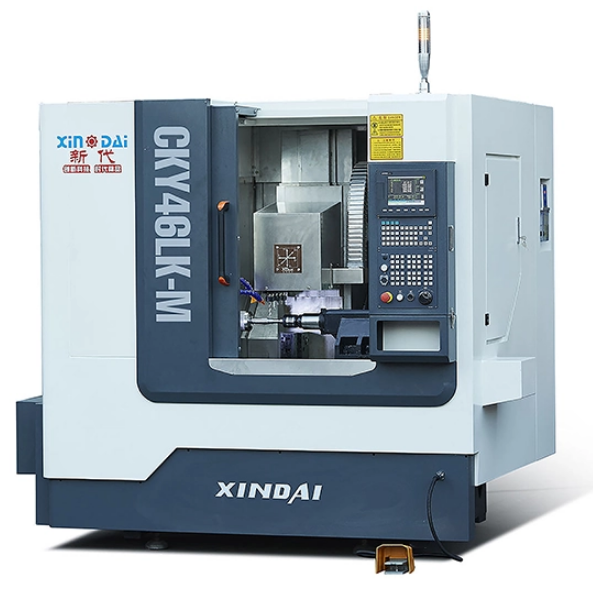
The foundation of any turning operation is its ability to produce parts that meet drawing specifications. This goes far beyond a simple dimensional tolerance. True precision is a combination of dimensional accuracy, geometric integrity, and surface quality. When evaluating a machine, you must look at the specifications that directly influence these three pillars.
While a basic tolerance like ±0.005” (0.13mm) is a common starting point, modern manufacturing for industries like aerospace, medical, and automotive demands much more. High-end turning centers are evaluated on their ability to consistently achieve International Tolerance (IT) grades, such as IT6 and IT7. Holding an IT6 grade on a 50mm diameter shaft means maintaining a tolerance zone of just 16 microns (0.016mm).
However, dimensional size is only part of the story. Geometric Dimensioning and Tolerancing (GD&T) defines the allowable variation in form, orientation, and location of features. For complex cylindrical parts, specs like concentricity, cylindricity, and perpendicularity are often more critical than diameter alone. A turning center's ability to hold tight GD&T callouts depends on the rigidity of its frame, the precision of its guideways, and the accuracy of its control system. A machine might hold a diameter perfectly but fail on a concentricity requirement if its spindle bearings have excessive runout.
Surface roughness, measured as Ra (Roughness average), is critical for sealing surfaces, bearing journals, and any component requiring low friction or high fatigue life. The target for precision CNC turning is often Ra 0.4μm (16μin) or better. This finish quality is directly impacted by two key machine characteristics:
Spindle Quality: A well-balanced, high-quality spindle with minimal vibration is essential. Any vibration from the spindle motor or bearings will translate directly into chatter marks on the workpiece surface.
-
The smoothness and responsiveness of the servo motors and ballscrews that drive the tool turret determine the consistency of the feed rate, preventing the microscopic hesitations that create lines on the part.
Furthermore, machines with "Hard Turning" capabilities offer a significant competitive advantage. This process allows for the finishing of hardened materials (HRC 55-65) directly on the lathe, often eliminating the need for a secondary grinding operation. This reduces lead times, cuts down on part handling, and improves overall process efficiency.
It's crucial to distinguish between accuracy and repeatability.
Accuracy is the ability to move to a commanded position (e.g., X=100.000mm).
-
is the ability to return to that exact same position over and over again.
For high-volume production, repeatability is often more important because offsets can be used to correct for minor inaccuracies. A machine with poor repeatability will produce parts of varying sizes throughout a run, even if its initial accuracy is perfect. This specification is heavily influenced by the feedback system used on the machine's axes. While rotary encoders mounted on the servo motors are standard, the most precise machines utilize glass scales (linear encoders) mounted directly to the machine's moving components. Glass scales measure the actual position of the slide, bypassing any potential errors from ballscrew thermal expansion or backlash, resulting in a much more accurate and repeatable feedback loop.
Once you've established a machine's precision baseline, the next step is to ensure it can physically accommodate your parts and has the functional capabilities to machine them efficiently. This involves understanding the difference between the machine's physical size (capacity) and its operational features (capability).
Reading a capacity spec sheet requires careful interpretation. The headline numbers can be misleading if you don't understand what they truly represent.
These two numbers define the absolute maximum diameter of a workpiece.
Swing Over Bed: The largest diameter that can rotate over the machine's main ways without interference.
-
The largest diameter that can be turned over the machine's cross slide, which carries the turret. This is the
maximum turning diameter for most operations and is always smaller than the swing over bed.
This spec defines the longest part that can be machined between the chuck and the tailstock. However, you must account for real-world interference. The length of the chuck, jaws, and the tooling itself can reduce the usable turning length. Always check the machine's interference diagram to understand the true work envelope.
This is one of the most frequently misunderstood specifications. The bar capacity is the maximum diameter of bar stock that can pass through the spindle and be fed by a bar feeder. It is not the same as the spindle bore diameter. To use a bar feeder, a spindle liner tube must be installed, which reduces the effective diameter. For example, a machine with a 65mm spindle bore might only have a 52mm bar capacity after the liner is installed. This is a critical detail for shops running high-volume production from bar stock.
Modern turning centers are much more than simple lathes. Their capabilities extend far into the realm of milling, allowing for the completion of complex parts in a single setup ("one-hit" machining).
The addition of a C-axis (spindle rotation control) and live tooling (rotating tools in the turret) transforms a turning center. It allows for operations like drilling off-center holes, milling flats, and engraving on the face or diameter of a part. A machine equipped with these features can function as a hybrid, much like a Vertical Milling Tail Machine, drastically reducing the need for secondary operations on a mill.
While a C-axis allows for some milling, a true Y-axis provides far greater capability. The Y-axis allows the tool to move above and below the centerline of the spindle. This is essential for milling true geometric features like keyways or pockets that are not on the part's diameter. Machines without a Y-axis must use polar coordinate interpolation, a less accurate and slower method for creating these features.
A sub-spindle (or secondary spindle) provides the ultimate boost in productivity. After the first side of a part is machined, the sub-spindle can grab the part, pull it away from the main spindle, and allow for machining on the back side. This eliminates the need for an operator to manually flip the part, reducing cycle times, improving concentricity between features on opposite sides, and enabling fully automated "lights-out" production.
The physical orientation of the spindle—vertical or horizontal—is a fundamental design choice that dictates the machine's ideal applications. Each architecture offers distinct advantages related to part handling, chip control, and footprint.
A Vertical Lathe CNC Machine mounts the chuck in a horizontal plane, resembling a potter's wheel. This configuration is exceptionally well-suited for heavy, large-diameter, and relatively short workpieces like gear blanks, brake rotors, and aerospace rings.
Gravity-Assisted Loading: Placing a heavy part onto a horizontal chuck is far easier and safer than clamping it in a horizontal spindle. Gravity works with you, ensuring the part is seated securely before clamping. This makes automation with robotics simpler and more reliable.
Chip Evacuation: Chips and coolant fall directly down and away from the cutting zone, preventing re-cutting of chips which can damage the surface finish and cause premature tool wear.
Footprint Efficiency: Vertical lathes typically have a smaller footprint than horizontal machines of a similar swing capacity, making them ideal for cellular manufacturing layouts.
The traditional horizontal architecture remains the most common choice for a wide range of applications, particularly those involving longer, shaft-like components.
Bar Feeding Optimization: The horizontal layout is naturally suited for integration with automatic bar feeders, making it the default choice for high-volume production of small to medium-sized parts.
Tailstock and Steady Rest Support: For long, slender parts, a tailstock is essential to support the end of the workpiece and prevent deflection. Horizontal machines can also easily incorporate one or more steady rests to provide support along the length of the part, maintaining concentricity and preventing vibration.
The choice between vertical and horizontal is driven by the geometry and weight of your typical parts. The table below provides a general guide for mapping applications to the appropriate machine architecture.
| Factor | Vertical Turning Center | Horizontal Turning Center |
|---|---|---|
| Ideal Part Shape | Large diameter, short length (puck-shaped) | Small to medium diameter, long length (shaft-shaped) |
| Primary Industries | Aerospace (rings, flanges), Automotive (flywheels, brake discs), Energy (valves) | Automotive (shafts), Medical (implants), General Jobbing |
| Key Advantage | Easy handling of heavy parts; excellent chip control | Excellent for bar-fed production and long parts requiring tailstock support |
| Automation | Often integrated with gantry loaders or robots for single part loading | Easily paired with automatic bar feeders for continuous production |
The heart of any turning center is its spindle, and its performance over a full production shift is governed by mechanical construction and thermal management. These factors are often buried in the spec sheet but have an outsized impact on day-to-day precision.
The design of the spindle directly affects its speed, rigidity, and long-term accuracy.
Bearing Types: High-precision spindles use angular contact ball bearings, which provide excellent radial and axial stiffness, ideal for high speeds and fine finishes. For heavy-duty applications involving interrupted cuts, some machines may use double-row roller bearings at the front of the spindle for maximum rigidity, though this can limit the maximum RPM.
Horsepower vs. Torque Curves: Don't just look at the peak horsepower rating. You need to examine the full horsepower and torque curve. When machining tough alloys like Inconel, Titanium, or stainless steel, having high torque at low RPMs (often called "low-end grunt") is more important than high horsepower at maximum speed. A machine without sufficient low-end torque will stall or chatter during heavy roughing cuts.
As a machine runs, the spindle, ballscrews, and motors generate heat. This heat causes the machine's structure to expand, which can alter the position of the tool tip by several microns. This phenomenon, known as thermal displacement, is a major source of dimensional drift during a production run.
High-quality machines manage this in several ways:
Symmetric Design: Building the headstock and bed with a thermally symmetric design ensures that as components heat up, they grow in a predictable and uniform way, minimizing distortion.
Liquid Cooling: Circulating cooled oil or coolant through jackets around the spindle and ballscrews actively removes heat, keeping the machine at a stable operating temperature.
Thermal Sensors and Compensation: The most advanced systems place temperature sensors at critical points on the machine. The CNC control uses this data to build a thermal model and proactively apply microscopic axis corrections to compensate for growth in real-time. This is how a machine can maintain ±0.002mm consistency from a "cold start" in the morning to the end of an 8-hour shift.
The turret holds the tools and must be both fast and rigid. Indexing speed (the time it takes to switch from one tool to the next) impacts non-cutting time and overall cycle time. Turret rigidity, however, affects part quality. The tooling interface is key here. The two most common systems are VDI (Verein Deutscher Ingenieure) and BMT (Bolt-Mounted Turret). While VDI offers faster tool changes, BMT turrets, which bolt the tool holder directly to the face of the turret with four or more bolts, provide significantly higher rigidity. This makes BMT the preferred choice for applications involving heavy interrupted cuts or long boring bars where stability is paramount.
Choosing the right machine isn't just about finding the highest specifications; it's about finding the most profitable solution for your business. This requires a holistic view that includes the total cost of ownership (TCO) and a realistic assessment of your needs to avoid the common "over-spec" trap.
One of the biggest financial mistakes a shop can make is buying more machine than it needs. For example, purchasing a machine with a positioning accuracy of ±0.001mm to produce parts that only require a tolerance of ±0.01mm drastically inflates your capital cost without providing any tangible benefit. The premium paid for that extra micron of precision destroys your margin and extends your ROI timeline.
It's essential to balance "nice-to-have" features against actual part complexity. Do you truly need a 5-axis turning center if 95% of your work can be completed with a 3-axis machine with live tooling? A thorough analysis of your current and anticipated part mix is crucial to making a cost-effective decision.
The purchase price is just the beginning. TCO includes all costs associated with owning and operating the machine over its lifespan.
Maintenance Realities: Consider the cost and frequency of critical maintenance tasks. A high-speed spindle rebuild can cost tens of thousands of dollars. How often does the turret need realignment to maintain precision? Availability and cost of spare parts are also major factors.
Energy Consumption: Modern machines often include "green" features like energy-saving hydraulic units and automatic shutdowns. While these may increase the initial price, the long-term savings in electricity can be substantial and should be factored into the ROI calculation.
Even the perfect machine can fail to deliver if it's not implemented properly.
Operator Learning Curves: Every CNC control has its own workflow and quirks. Switching between control systems like Fanuc, Siemens, or proprietary controls from builders like Mazak or Okuma requires retraining. The time it takes for operators to become proficient on a new, more complex machine is a real cost.
-
A multi-axis turning center is only as good as the CAM software programming it. Ensure your CAM system has a reliable, verified post-processor for the specific machine you are considering. Without it, you won't be able to use the machine's advanced features, turning your investment into an expensive 2-axis lathe.
Successfully navigating the world of CNC turning center specifications requires a shift in mindset—from simply reading numbers to understanding their impact on your production floor. The process can be distilled down to evaluating three core pillars: capacity, thermal stability, and axis capability. You must first ensure the machine can physically hold and process your largest and smallest parts. Then, you must verify it has the thermal management and mechanical rigidity to hold your required tolerances consistently over an entire shift. Finally, you must select the multi-axis capabilities that will reduce setups and shorten cycle times for your specific part mix.
Your final recommendation should be guided by a simple question: What is the single biggest bottleneck currently limiting your shop's throughput or quality? Prioritize the machine specifications that directly address that bottleneck. By focusing on the specs that solve your most pressing problems, you ensure your investment delivers a measurable and immediate return. For a personalized consultation to match the right machine specifications to your unique applications, reach out to our team of experts.
A: A CNC lathe is typically a simpler, 2-axis machine for basic turning operations. A CNC turning center is a more advanced machine, usually fully enclosed for safety and coolant containment. It often features a tool turret for automatic tool changes and can have additional axes (C, Y, B) and live tooling for milling, drilling, and other operations, allowing for more complex parts to be completed in one setup.
A: Spindle runout is the error in rotation of the spindle, causing it to wobble slightly instead of rotating perfectly on its central axis. This error transfers directly to the workpiece. It can lead to problems with roundness (parts become oval-shaped), concentricity between different diameters, and poor surface finishes. Minimizing runout is critical for holding tight geometric tolerances.
A: Choose a vertical lathe for heavy, large-diameter, and relatively short parts. Its key advantages are ease of loading (gravity helps seat the part) and superior chip evacuation. Horizontal lathes are better suited for long, slender shaft-like parts, especially when using a bar feeder for automated, high-volume production, as they can easily accommodate tailstocks and steady rests for support.
A: For many parts, yes. A turning center with a Y-axis and live tooling can perform a wide range of milling, drilling, and tapping operations. It excels at creating features on a cylindrical part in a single setup. However, for complex 3D contouring, heavy material removal, or large prismatic parts, a dedicated milling machine will still be more efficient and capable.
A: The most common issues are wear and misalignment. Spindle bearings can wear out, increasing runout. The ballscrews and linear guides can lose their preload, introducing backlash. The tool turret can get knocked out of alignment from a crash, affecting tool centerline height and perpendicularity. Regular preventative maintenance, including geometric alignment checks and lubrication, is essential to maintaining a machine's original precision.


