
English 
Address:
No, 309 Guandoumen Road, Wuhu Distict, China (Anhui) pilot Free Trade Zone


Views: 0 Author: Site Editor Publish Time: 2026-04-07 Origin: Site


You use rapid prototyping to quickly make your ideas real. This process helps you build, check, and change a design fast. You make a prototype, test it with people, and change it after hearing what they think. Rapid prototyping lets you find design mistakes early and fix them before making many products. In today’s factories, rapid prototyping makes work faster and helps make better products. Machines like Xindai CNC’s XD-V50K help you do hard prototyping jobs with great accuracy and speed.
How rapid prototyping helps you:
Benefit
Description
Faster time to market
Test designs before building, so research and development is faster
Better design verification
Try and improve ideas before making many products
Early flaw detection
Find and fix problems with quick, cheap models
Rapid prototyping lets you quickly make real models from ideas. This makes the design process faster. 3D printing and CNC machining help build exact prototypes. These tools make it easy to test and fix designs. Getting feedback from users during prototyping finds problems early. This helps you make better products. Rapid prototyping saves time and money. You can test ideas before making lots of products. Many industries use rapid prototyping to improve product quality. It also helps them meet what customers want.
You use rapid prototyping to make digital designs into real models fast. This process lets you build a prototype in just hours or days. You do not have to wait weeks or months. Rapid prototyping is all about speed and making things better step by step. You can test ideas, get feedback, and change things quickly. With old methods, you waited a long time for results. Now, you see what works and what does not right away. Then you change your design to fix problems.
Rapid prototyping uses 3d printing as a main tool. You make parts from 3d designs without special tools. This lets you try new shapes and features easily. You can make small batches or custom parts to see if they work. Rapid prototyping helps you understand your ideas better. You can compare designs and show them to your team. Real models make it easier to explain ideas and get feedback you can use. You match your designs to what users need and make them better before making a lot.
Key Concepts of Rapid Prototyping:
Fast creation of physical parts from digital designs
Rapid iterations between design and prototype
3d printing enables design freedom and quick changes
Supports small-batch production and custom solutions
Enhances communication and understanding of user needs
You see rapid prototyping in many types of factories. It helps you check designs, test how things work, and make sure they meet rules. You use prototypes to see if things are easy to use, look good, and are safe. Rapid prototyping lets you test parts and groups of parts before making a lot. You get feedback from customers and change your designs to fit what people want.
Design Evaluation: You make models to see how a product looks and feels.
Functionality Testing: You check if parts work together and fix problems early.
Engineering Validation: You make sure your prototype meets the right standards.
Market Testing and Feedback: You show prototypes to customers and learn what they like.
Different industries use rapid prototyping in their own ways. In aerospace, you focus on making strong and exact parts for planes and engines. In automotive, you improve car designs and make them safer, especially for frames and self-driving systems.
Industry | Focus Areas | Key Applications |
|---|---|---|
Aerospace | Precision and durability | Aircraft structures, engine parts, avionics |
Automotive | Design refinement and safety | Chassis, electric vehicles, autonomous systems |
Rapid prototyping helps you make products that fit what people need, cut down mistakes, and finish work faster. You get a big advantage in today’s factories by using 3d printing and new prototyping tools.
You start rapid prototyping by turning your ideas into digital designs. Most people use CAD software for this step. You can draw, shape, and adjust your product on the computer. This makes it easy to test ideas and see how things fit together. Once you finish your design, you move to the next step: making a testable product model.
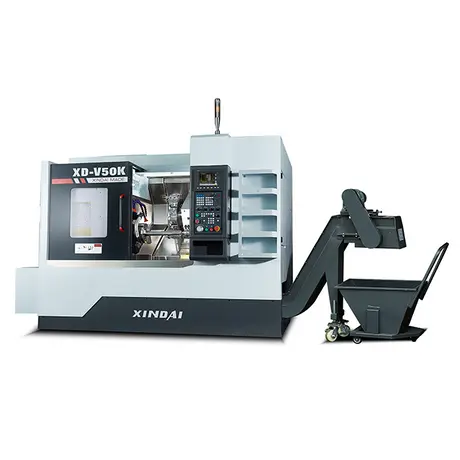
3d printing plays a big role in this stage. You send your CAD file to a 3d printer or a CNC machine. The machine builds your prototype layer by layer or cuts it from a solid block. If you need to make complex parts, you can use advanced machines like Xindai CNC’s XD-V50K. This machine handles turning, milling, and grinding all in one, so you can create detailed prototypes with high accuracy. You can make parts for cars, planes, or even custom tools.
After you build your prototype, you test it. You check if it works, fits, and looks right. You show it to your team, users, or other people who care about the project. They give you important feedback. You use this feedback to find problems and think of ways to fix them.
Here is a simple table that shows the main steps in the rapid prototyping workflow:
Step Number | Step Description | Fidelity Level |
|---|---|---|
1 | Create your digital design using CAD software | N/A |
2 | Choose your prototyping method (3d printing, CNC machining, etc.) | Low, Mid, High |
3 | Construct your prototype (choosing the right fidelity) | Low, Mid, High |
4 | Test and gather feedback: Learning from users and stakeholders | N/A |
5 | Iterate and refine: The core of 'rapid' | N/A |
You repeat these steps as many times as needed. This cycle of refining and testing helps you improve your product before you make many copies. You can explore ideas quickly and fix mistakes early.
Rapid prototyping depends on getting feedback and making changes fast. You use an iterative process to test your product, listen to users, and make it better each time. This approach helps you avoid costly mistakes later.
You testable product models to check if your design works in real life.
You test ideas and see if they solve the problem.
You collect stakeholder feedback to learn what users and team members think.
You use this feedback to refine designs and make your product fit user needs.
You keep testing new ideas and making changes until you get the best result.
This method supports user-centered development. You focus on user-centric design by involving real users in every step. Their feedback helps you spot hidden problems and find new opportunities. You make sure your product matches what people want and need.
Rapid prototyping lets you speed up the iteration process. You can redesign and test your prototype many times in a short period. This reduces the risk of launching a flawed product. You save time and money by fixing issues early.
Tip: Always involve users and stakeholders when you test your prototypes. Their input leads to better products and helps you meet real-world needs.
By following this process, you make sure your design and development stay on track. You keep refining your product until it is ready for the market.
When you start rapid prototyping, you pick low-fidelity or high-fidelity. Low-fidelity uses easy tools like sketches, paper models, or wireframes. These are cheap and help you test ideas fast. You use them to brainstorm or check simple ideas. High-fidelity uses digital mockups or interactive models. These look and feel like the real product. You use high-fidelity to show your design to clients or test how people use it.
Here is a table that compares both types:
Prototype Type | Cost | Speed | Application |
|---|---|---|---|
Low-fidelity | Affordable | Fast | Brainstorming and conceptual testing |
High-fidelity | Costly | Time-consuming | Usability testing and client presentations |
Low-fidelity examples: sketches, paper prototypes, wireframes
High-fidelity examples: digital mockups, interactive prototypes
You use 3d printing and CNC machining for rapid prototyping. 3d printing builds parts layer by layer. This lets you make complex shapes and test many designs quickly. You can get a prototype in just one day. 3d printing works best for plastics and some metals. It is good for fast changes and creative ideas.
CNC machining cuts parts from solid blocks. This gives you high accuracy and works with many materials, like metals and plastics. CNC machining is better for strong parts or bigger batches. Machines like the XD-V50K from Xindai CNC help you make detailed prototypes with tight tolerances. You use CNC machining when you need parts that are strong and exact.
Feature | 3D Printing | CNC Machining |
|---|---|---|
Accuracy | ±0.1–0.3 mm | ±0.005–0.02 mm |
Material Compatibility | Plastics, some metals | Metals, plastics |
Turnaround Time | Prototypes in a day, fast changes | Fast for batches, setup needed |
You also use software prototyping in rapid prototyping. This helps you test digital products, like apps or websites. You can build wireframes or interactive models to see how users use your design. Software prototyping lets you fix problems before you build the real thing. You save time and money by finding issues early.
Tip: Pick your prototyping method based on your project. Use 3d printing for fast ideas, CNC machining for strong and exact parts, and software prototyping for digital products.
You can also use other methods like laser cutting, water jet cutting, or casting. Each method works with different materials and project goals. High-precision machines, such as the XD-V50K, help you get the best results in industrial rapid prototyping.
Using rapid prototyping in manufacturing gives you many benefits. You can test ideas fast and see results in days, not weeks. For example, a startup in aerospace went from design to testing a rocket part in just weeks. In medicine, a tech company made a custom surgical tool for a hard operation and delivered it in days. Car makers use prototyping to improve engine parts and speed up new ideas.
You make product development faster.
You save money by finding problems early.
You help teams work better and agree more clearly.
You lower risks by testing prototypes before full production.
You improve designs faster and reach the market sooner.
Improvement Type | Description |
|---|---|
Faster Product Development | Shorter cycles let you create, test, and improve designs quickly. |
Cost Savings | Finding flaws early stops costly rework. |
Better Collaboration | Prototypes help teams talk and approve designs faster. |
Less Material Waste | Testing again and again cuts waste and saves resources. |
Competitive Edge | Faster innovation gives you a market advantage. |
You face some challenges during prototyping. Picking the right material affects how well it works and the cost. Complex designs can cause mistakes and slow down machining. Getting tight tolerances is important but can cost more. Surface finish quality matters for how well it works. Time pressure may make you rush and risk quality. Managing costs is always a worry.
Choosing materials can be hard. Test different ones and ask experts for help.
Complex designs may cause errors. Make designs simpler and use DFM analysis.
Tight tolerances need precise machines and repeated prototyping.
Surface finish gets better with post-processing and good machining.
Time pressure needs careful planning and working on tasks at once.
Managing costs means optimizing designs and picking cheaper materials.
You can beat challenges and get the most benefits by using best practices. Start with low-cost tools and budget-friendly CAD software. Work with experts to make sure prototypes are good quality. Try different materials to find cheaper options. Check prototypes often and test settings for steady results. Train your team to build skills and encourage strong teamwork.
Tip: Work together early and often. Include all stakeholders from the start to get agreement and support.
Break projects into steps to save time.
Use prototyping tools that fit your manufacturing process.
Set clear goals for each prototype.
Write down your choices and learn from each try.
Balance speed with quality to keep high standards.
You improve by repeating with purpose and learning from feedback. Rapid prototyping helps you lower launch risks and get better team agreement.
Rapid prototyping changes how products are made. It makes designing and testing faster. It helps find problems early and allows you to try big ideas. You can create small batches without needing full production, saving money. Machines like Xindai CNC’s XD-V50K give you high accuracy and quick results.
Trend | Description |
|---|---|
Increased Adoption | More industries are using rapid prototyping for new products. |
Advancements in Tech | New tools make prototypes quicker and more precise. |
Focus on Sustainability | Factories use greener methods and produce locally. |
Using modern CNC solutions for rapid prototyping helps you stay ahead.
You use rapid prototyping to turn ideas into real models quickly. This helps you test designs, find problems, and improve products before making many copies.
You use CNC machines to make strong and precise prototypes. Machines like the XD-V50K let you create complex parts with high accuracy. This helps you test real-world designs.
Yes, you can. You use CNC machining or special 3D printers to make metal prototypes. This lets you test parts for strength and fit before full production.
You pick 3D printing for fast, creative shapes and simple changes. You choose CNC machining for strong, exact parts and when you need tight tolerances.
User feedback helps you find problems and improve your design. You learn what works and what does not. This makes your final product better.


