
English 
Address:
No, 309 Guandoumen Road, Wuhu Distict, China (Anhui) pilot Free Trade Zone


Views: 0 Author: Site Editor Publish Time: 2026-03-12 Origin: Site


The transition from single-spindle to dual-spindle CNC operations marks a significant leap in manufacturing productivity. These sophisticated machines can complete parts in a single cycle, drastically reducing handling and setup times. However, this increased throughput comes with a parallel rise in maintenance complexity. Unplanned downtime in a multi-axis, multi-spindle environment is not just an inconvenience; it's a major financial drain that halts high-volume production instantly. This article provides a technical roadmap for machine shops and production managers. It outlines the essential maintenance protocols needed to preserve the precision, extend the operational lifespan, and maximize the return on investment of these high-output CNC lathes. You will learn to move from a reactive repair model to a proactive asset management strategy.
Synchronization is Critical: Maintenance must focus on the alignment between the primary and sub-spindle to prevent part transfer failures.
Power Turret Integrity: Regular indexing and lubrication of the power turret are non-negotiable for maintaining tool-setting accuracy.
TCO vs. Reactive Repair: Preventive maintenance (PM) reduces Total Cost of Ownership by avoiding catastrophic spindle bearing failures.
Thermal Management: Consistent coolant and lubrication temperature control are essential for dual-spindle precision.
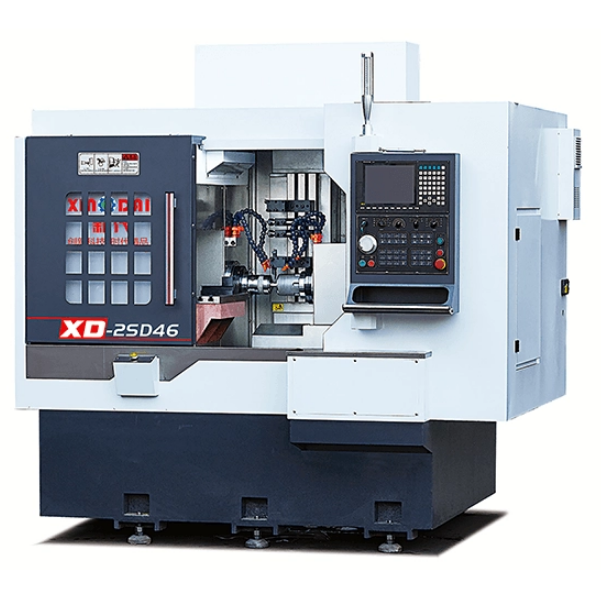
Investing in a dual spindle CNC lathe is a commitment to higher efficiency and "done-in-one" manufacturing. To protect that investment, your maintenance philosophy must evolve. It requires a strategic approach that goes far beyond basic upkeep and directly impacts your bottom line.
For a single-spindle machine, success is often defined as "it runs and makes good parts." For a dual-spindle lathe, the criteria are far more stringent. Success means the machine consistently holds tight tolerances during the critical part hand-off between the main spindle and the sub-spindle. It means the secondary operations are just as accurate as the primary ones. Your maintenance program's goal is to ensure this seamless synchronization, cycle after cycle, without degradation in performance. This requires a focus on geometric alignment, thermal stability, and electromechanical timing.
When a single-spindle lathe goes down, one stream of production stops. When a dual-spindle machine fails, the impact is magnified. You lose the output of what is effectively two machines combined into one highly efficient cell. A failure in the part transfer mechanism, the sub-spindle, or the power turret can bring the entire production sequence to a halt. This makes downtime at least twice as costly in terms of lost output, not to mention the increased complexity and cost of repairs for these more intricate systems.
A proactive maintenance plan is fundamentally about risk mitigation. In a CNC Lathe with Dual Spindles And Power Turret, risks hide in places that don't exist on simpler machines. These "hidden" wear points include:
Part Ejector/Catcher Mechanisms: Components that ensure finished parts are handled correctly can fail, causing jams.
Sub-Spindle Drawbar: Subject to wear and tear from constant clamping and unclamping for secondary operations.
Synchronization Gearing/Belts: The systems that time the C-axis rotation of both spindles for hand-offs can stretch or wear, causing positioning errors.
Live Tooling Drive Shafts: The internal gearing of a power turret undergoes significant stress and requires dedicated lubrication and inspection.
Identifying and regularly inspecting these unique components is crucial to preventing unexpected and costly failures.
A disciplined preventive maintenance (PM) schedule delivers a return on investment through several key drivers. The most obvious is increased uptime and consistent part quality. However, the financial benefits run deeper. A well-maintained machine with detailed service logs commands a significantly higher resale value. Furthermore, proactive maintenance extends the machine's overall lifespan, delaying the need for major capital reinvestment. By preventing catastrophic failures like a spindle crash, you avoid massive repair bills and the associated weeks of lost production, making PM a powerful tool for managing the Total Cost of Ownership (TCO).
The core advantage of a dual-spindle lathe is its ability to perform synchronized operations. This capability depends entirely on the precise alignment and correct tool setting for both spindles. Neglecting this area leads to scrapped parts, tool breakage, and potentially severe machine damage.
Coaxiality refers to the perfect centerline alignment between the main spindle and the sub-spindle. If these two axes are not perfectly aligned, the part hand-off will be compromised, leading to concentricity issues on the finished part. Verifying this alignment is a high-skill task, but it's essential.
Verification Procedure Best Practices:
Use a precision ground test bar and two high-resolution dial indicators.
Mount the test bar in the main spindle.
Mount the indicators on the sub-spindle or a tool station, measuring runout at both the near and far ends of the test bar.
Sweep the indicators around the bar (radially) and along the bar (axially) to check for misalignment in the X, Y, and Z axes.
Any deviation beyond the manufacturer's specification (often less than 0.0002 inches or 5 microns) requires geometric adjustment. This is typically a job for a qualified service technician.
Accurate tool setting is paramount for precision. On a Dual-Spindle Tool Setting CNC Lathe, you must manage offsets for tools working on both sides of the part.
Most modern machines use an automatic tool presetter arm. This probe must be calibrated regularly to ensure it provides accurate geometry offsets. The calibration process involves using a master tool of known length to set the machine's reference point. Critically, you must ensure the probe's accuracy is validated for tools approaching both the main and sub-spindles, as any slight positional error can be magnified in the final part.
Operators must be proficient in managing two sets of work offsets (e.g., G54 for the main spindle, G55 for the sub-spindle). A common mistake is failing to account for the exact "part zero" on the sub-spindle after the hand-off. The program must accurately define this new reference point for all secondary operations to maintain dimensional accuracy.
A seamless hand-off is a ballet of mechanical and software synchronization. The C-axes of both spindles must be perfectly timed to ensure the chuck jaws or collets on the sub-spindle grip the part at the correct orientation. This is controlled by M-codes in the program. Regular checks should confirm that the M-code execution is crisp and the physical clamping/unclamping occurs without hesitation or binding. Any delay can cause the part to slip, ruining the part and potentially damaging the chucks.
Vibration analysis is a powerful predictive maintenance tool. By placing sensors on the spindle housings, you can capture a baseline vibration signature when the machine is healthy. Over time, you can monitor this data for changes. An increase in specific frequency bands can indicate the early stages of bearing wear, gear degradation, or imbalance—long before it becomes audible or affects the surface finish of your parts. Catching this early allows you to schedule a repair instead of suffering a catastrophic in-cycle failure.
The power turret, or live tooling turret, transforms a dual-spindle lathe into a true turn-mill center. It's a complex system that requires its own dedicated maintenance schedule to ensure it delivers the required power, speed, and accuracy for milling, drilling, and tapping operations.
High-RPM live tools generate significant heat. The internal gear trains that transmit power from the turret motor to the tool holder are particularly vulnerable to overheating and wear if not lubricated properly. Always use the lubricant type and grade specified by the machine tool builder. Check lubrication levels frequently and adhere to the recommended replacement schedule. Overheating is a key sign of lubricant breakdown or low levels, which can quickly lead to costly gear failure.
The turret must lock into position with extreme precision and rigidity for every tool change. This is typically achieved with a hydraulic or servo-driven clamping mechanism. Monitor the turret's clamping pressure to ensure it remains within the manufacturer's specified range. Signs of a problem include:
Audible "clunking" or hesitation during indexing.
Visible chatter marks on the workpiece during heavy cuts.
Inconsistent tool center heights during setup.
Low clamping force leads to poor repeatability, dimensional errors, and excessive tool wear.
Complex dual-spindle cycles often involve high-pressure coolant to evacuate chips effectively from deep bores or intricate milled features. The lines feeding coolant through the turret and out the live tool holders can become clogged with fine chips or swarf. Periodically flush these lines and check all nozzles to ensure a consistent, high-pressure flow. Poor chip evacuation can lead to tool breakage, poor surface finish, and overheating of the cutting edge, especially during unmanned or lights-out operations.
The turret is constantly exposed to a harsh environment of coolant, fine metal chips, and abrasive dust. A series of wipers and seals protects its sensitive internal components—like bearings, gears, and electronic switches—from this contamination. These seals wear out over time and lose their effectiveness. Routinely inspect way cover wipers and turret seals for tears, hardening, or visible gaps. Replacing these inexpensive wear items is a small price to pay to prevent contamination that could lead to a multi-thousand-dollar turret rebuild.
Shifting from a reactive "fix it when it breaks" approach to a proactive maintenance strategy involves two primary methodologies: preventive and predictive. A successful program blends both, using a structured framework to ensure machine health and optimize resource allocation.
Preventive maintenance begins with simple, consistent daily tasks performed by the machine operator. These checks catch common issues before they escalate.
Spindle Warm-up Cycles: Run a 15-20 minute warm-up program at the start of each shift. This circulates lubricant and gradually brings the spindles and bearings to a stable operating temperature, preventing shock and extending their life.
Hydraulic Pressure Checks: Verify that the hydraulic pressure for chuck clamping and turret functions is within the green zone on the gauges.
Way-Lube Levels: Check the lubrication reservoir for the ways and ball screws. Running low can cause severe and expensive damage to the machine's core motion system.
Coolant Concentration: Use a refractometer to check the coolant concentration. Incorrect ratios can lead to poor tool life, rust, and bacterial growth.
More in-depth technical inspections should be performed on a quarterly basis. These tasks often require more specialized tools and knowledge.
Machine Leveling: Check that the machine is still level using a precision machinist's level. A machine that has settled out of level can introduce twist into the machine bed, affecting geometric accuracy.
Thermal Growth Compensation: Verify that the machine's thermal compensation sensors are functioning. These systems adjust for minute changes in machine geometry as it heats up, which is critical for holding tight tolerances over long runs.
Filter Cleaning/Replacement: Inspect and clean or replace filters for the hydraulic unit, coolant system, and control cabinet air conditioners.
Predictive maintenance uses data and trend analysis to forecast failures. Instead of replacing parts on a fixed schedule, you replace them just before they are expected to fail. Key indicators to monitor include:
Spindle Load: Track the spindle load percentage during a consistent set of cuts. A gradual increase in load over weeks or months can indicate bearing degradation or lubrication issues.
Motor Temperature: Use an infrared thermometer to monitor the temperature of spindle motors, axis motors, and hydraulic pumps. A rising temperature trend points to impending problems.
Ball Screw Health: Use a ballbar analysis or a simple backlash check program to monitor the health of the machine's ball screws for increasing wear.
The financial justification for a robust maintenance program becomes clear when you compare the costs. Consider the total cost of ownership (TCO) by analyzing the investment in maintenance versus the cost of failure.
| Metric | Proactive PM Program | Reactive Repair Model |
|---|---|---|
| Annual Maintenance Cost | ~$5,000 (Annual Service Contract) | Minimal (Lube, filters only) |
| Cost of Failure Event | Low (Minor component replacement) | ~$40,000+ (Catastrophic spindle rebuild) |
| Associated Downtime | 1-2 days (Scheduled) | 2-4 weeks (Unplanned) |
| Impact on Production | Minimal, planned interruption. | Massive disruption, missed deadlines. |
| Overall TCO | Significantly Lower | High and Unpredictable |
Designing a maintenance program is one thing; successfully implementing it is another. Execution requires navigating common pitfalls, making smart decisions about resources, and maintaining rigorous standards.
One of the most frequent mistakes is assuming any CNC technician can properly service a complex dual-spindle lathe. These machines have unique geometric and electronic synchronization requirements. Over-relying on a "generalist" technician who lacks specific training on your machine model can lead to incorrect adjustments, particularly with spindle coaxiality or turret alignment. This can cause more harm than good. Another pitfall is inconsistent execution—daily checks are skipped, or quarterly audits are postponed, eroding the program's effectiveness.
Deciding whether to build an in-house maintenance team or outsource to a third party is a critical choice. The best path depends on your organization's scale and expertise.
In-House Team:
Pros: Immediate availability, deep familiarity with your specific machines and production demands.
Cons: High cost of training, specialized tools, and retaining skilled talent. May lack exposure to wider industry problems.
Outsourced OEM/Certified Provider:
Pros: Access to the highest level of expertise, proprietary diagnostic tools, and the latest service bulletins.
Cons: Higher hourly rates, potential scheduling delays.
Many shops find a hybrid approach works best, with operators handling daily checks and an OEM-certified provider performing annual or semi-annual deep inspections and alignments.
For shops operating under quality management systems like ISO 9001 or AS9100, meticulous documentation is not optional. Every maintenance action, from daily lubrication to a major alignment, must be logged. Using a digital Computerized Maintenance Management System (CMMS) is the best practice. It provides a searchable, auditable history of the machine's health, proves compliance, and is invaluable for troubleshooting recurring issues.
If you operate a fleet of multi-spindle machines, consistency is key. Develop standardized Standard Operating Procedures (SOPs) for all common maintenance tasks. This ensures every machine receives the same level of care, regardless of which technician or operator is performing the work. These SOPs should be clear, concise, and readily accessible near the machine. Standardization simplifies training, improves consistency, and makes it easier to track maintenance performance across the entire shop floor.
Effectively maintaining a dual spindle CNC lathe requires a fundamental shift in mindset. It's about moving away from a reactive, "fix-it" culture and embracing proactive asset management. This involves understanding the unique failure points of these complex systems, from sub-spindle alignment to power turret integrity. By implementing a structured program that blends preventive daily checks with predictive data analysis, you transform maintenance from a cost center into a powerful driver of profitability. A dual-spindle lathe is a precision instrument, and providing it with the specialized care it demands is the only way to unlock its full potential for productivity and ensure a long, reliable service life. Take a hard look at your current PM schedules and ask if they truly address the specific technical requirements of your most advanced manufacturing assets.
A: A full coaxiality check with indicators should be done annually by a qualified technician. However, you should also perform a check after any significant event, such as a machine crash, moving the machine, or if you begin to see unexplained concentricity problems in your parts. These events can easily knock the geometry out of alignment.
A: Key signs include unusual noises (whining or grinding) during live tool operation, which can indicate bearing or gear wear. Watch for slow or hesitant turret indexing, which may signal problems with the hydraulic or servo system. Poor repeatability, visible as inconsistent tool center heights or dimensional variations between parts, is another critical red flag.
A: Not necessarily different hardware, but it demands more rigorous calibration and process control. The same tool probe is typically used, but it must be calibrated to ensure its accuracy is consistent across its full range of motion when measuring tools for both main and sub-spindle operations. The machine's control software handles the offset calculations, but the initial physical accuracy of the probe is critical.
A: Poor coolant quality can severely shorten spindle life. If the concentration is too low, it can lead to corrosion on precision bearing surfaces. If it's contaminated with tramp oil or bacteria, it can degrade the spindle seals, allowing abrasive particles and corrosive fluid to enter the bearing housing. This contamination is a primary cause of premature spindle failure.
A: While exact figures vary, industry studies suggest the ROI is substantial. The primary returns come from increased machine uptime (often a 10-20% improvement) and the avoidance of catastrophic repair costs. A single avoided spindle rebuild, which can cost $40,000 or more plus weeks of lost production, can pay for several years of a comprehensive preventive maintenance contract.


